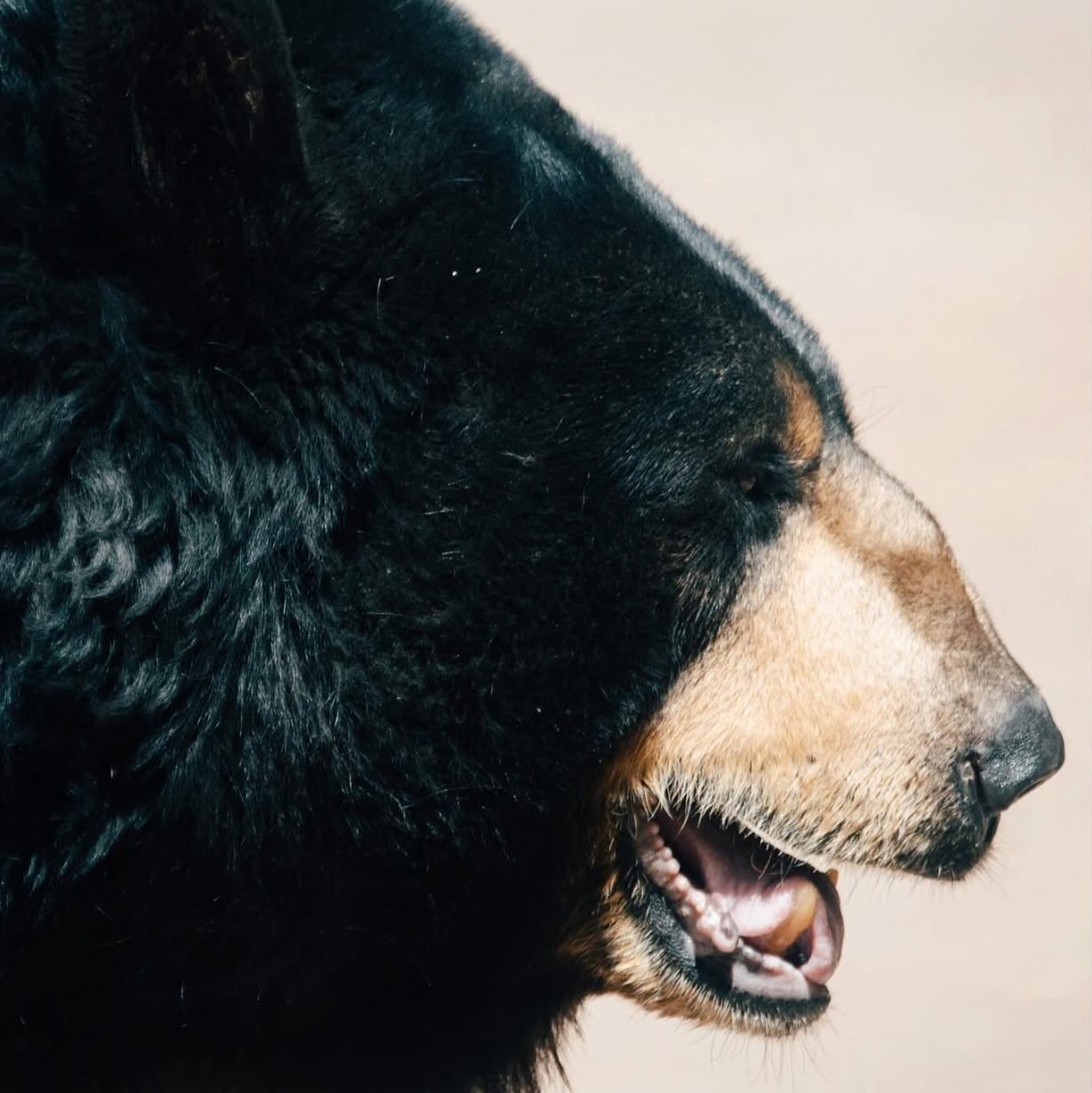
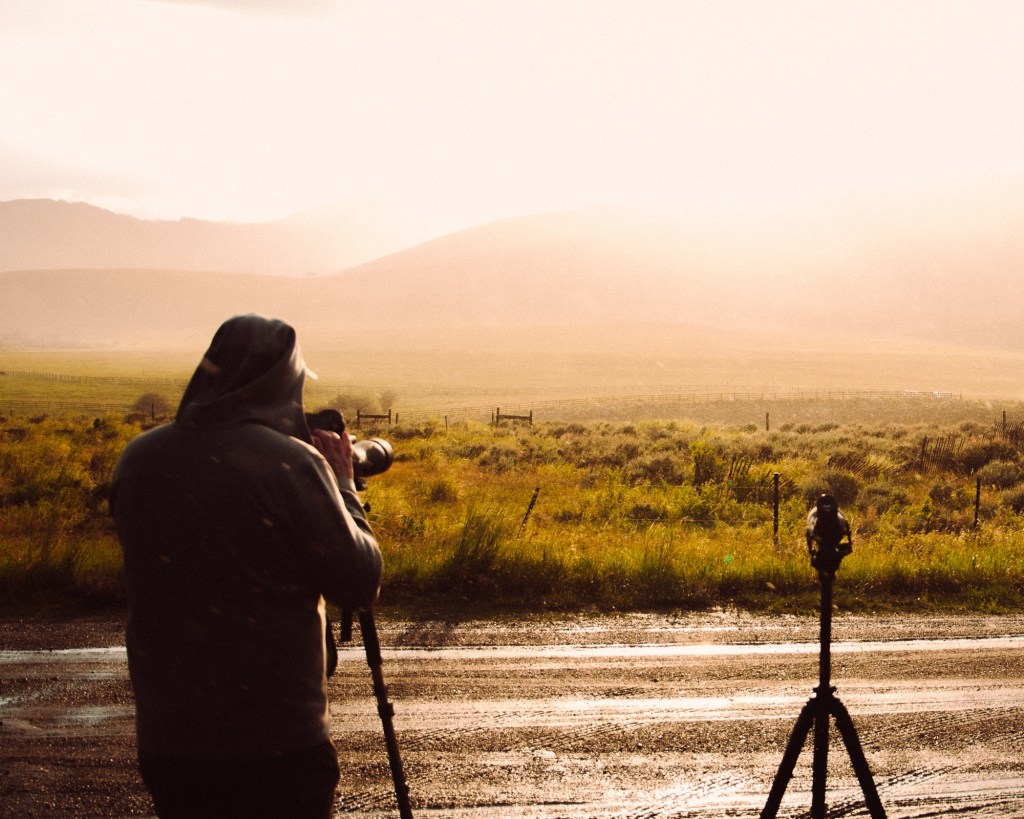
Yellowstone ends at a line on a map. The grizzlies don’t.
A few miles north of the park boundary, there is a place called Tom Miner Basin.
Picture a valley where national park wildlife walks straight into working ranch country—where the fence line between “wild” and “home” isn’t a hard wall, but part of the same living landscape. The B Bar Ranch sits there on private working land pressed right up against Yellowstone country. Cattle graze there. Horses work there. Mule deer move through there. And grizzlies do too.
For most people, Yellowstone is the entrance sign, the geysers, the traffic jams, the photos of a bear safely seen from the road. Tom Miner is where that postcard spills past the boundary. It’s the front porch of the park: ranches, forests, creeks, migration routes, and open ground that wildlife uses when it moves beyond the lines we drew on a map.
I’ve stood in Tom Miner and watched cattle, horses, mule deer, and grizzlies share the same hillsides. It changed how I think about coexistence.

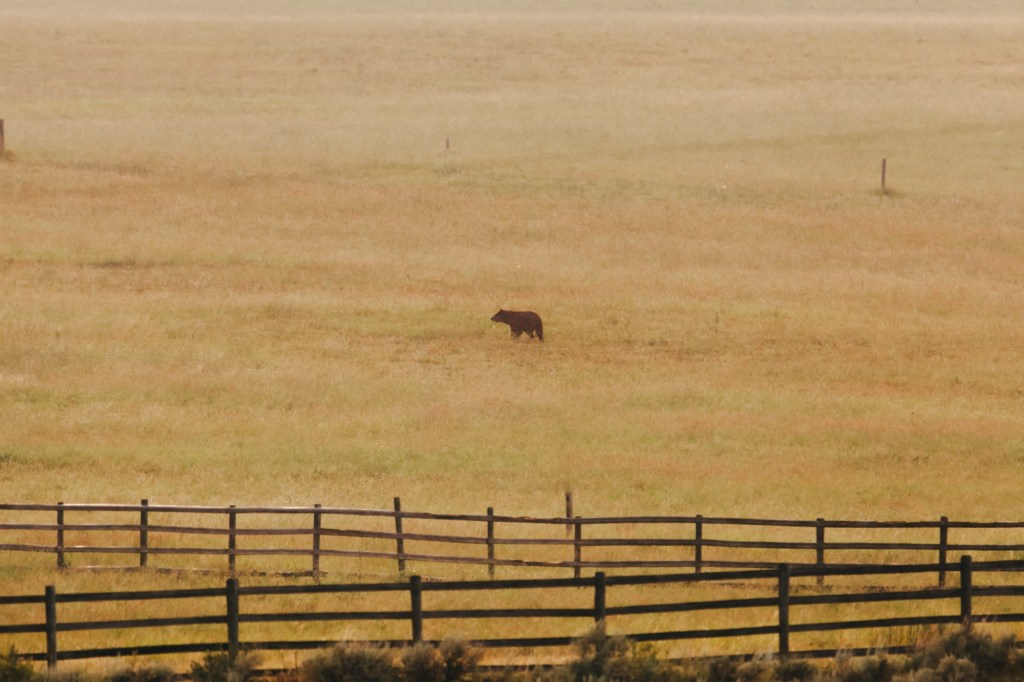
The B Bar Ranch is known for the hard, unglamorous work of living with predators instead of treating every conflict as proof they don’t belong. Malou Anderson-Ramirez, who’s been part of that work for years, represents a kind of practical courage I wish we talked about more: ranchers deserve real support, livestock losses are real, and grizzlies still deserve a future.
Coexistence isn’t pretending conflict never happens. It’s doing the work before conflict turns into a dead calf, a dead bear, or both.
If you’ve never seen a grizzly, this might sound like somebody else’s issue. But the same forests, rivers, and open ground that bears need to move and den are part of the systems that hold soil in place after hard rain, filter drinking water, buffer communities from floods and fire, and support the landscapes our food depends on.
From that valley, grizzlies don’t look like a simple success story. They look more like pandas of the Rockies—animals that hang on because we keep propping up corridors, habitat, conflict prevention, and legal protections around them, not because the system is suddenly safe.
And lately, some of those supports have started moving.
It’s “Just” the Language. That’s the Problem.
I kept thinking the grizzly proposal was the story.
It wasn’t.
The more I read, the more I realized it was sitting in the middle of several other changes almost nobody was talking about. One had to do with the word “harm.” Another had to do with the places wildlife actually lives. Another changed what happens after a species is listed as threatened.
None of them looked like a big deal by themselves.
Together, they started feeling a lot bigger.
Protection was never one law, one listing, or one line item. It depends on habitat, legal definitions, the protections attached to a listing, the way conflicts are handled, and the people doing the work on the ground. Several of those things are changing at once.
For years, the Endangered Species Act treated destroying an animal’s home as a kind of harm. If you bulldozed the place it fed, denned, or raised its young, that counted—even if you never touched the animal itself.
The law didn’t disappear. “Harm” didn’t disappear either. But the definition connecting habitat destruction to that word did.
That may sound like legal housekeeping, but it changes the argument. Instead of asking whether a project destroyed what an animal needs to survive, the fight may become whether anyone can prove that specific road, mine, or subdivision directly injured or killed it.
If we all agree a grizzly deserves protection—and most people do, even people who’ve never seen one—where exactly is the grizzly supposed to live?
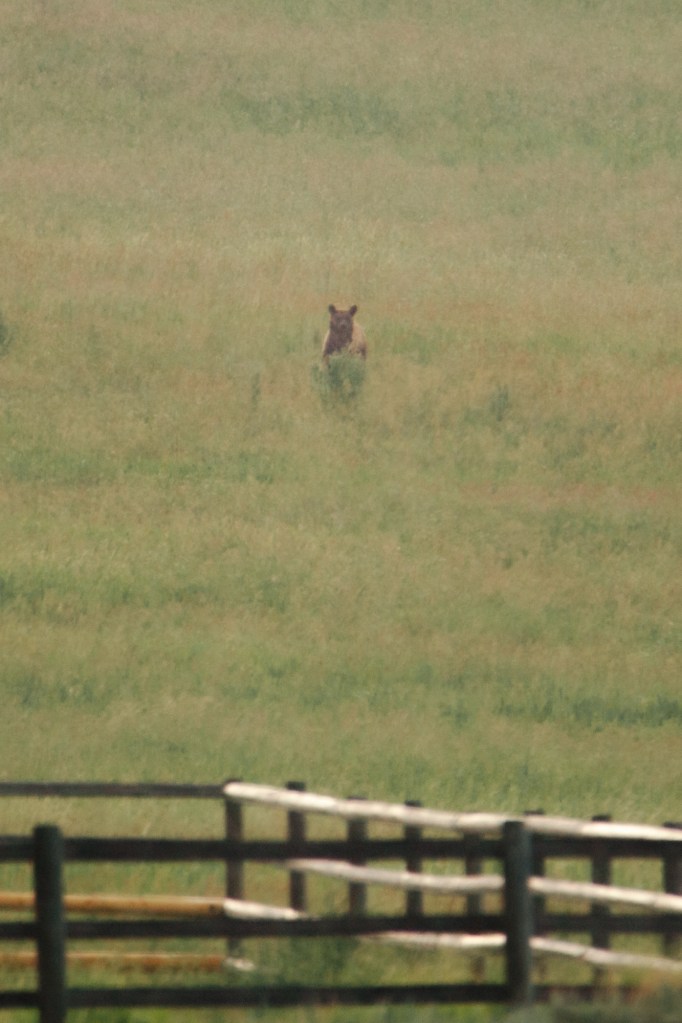
Because protecting an animal without protecting the ground underneath it isn’t much of a recovery plan.
That’s what “critical habitat” is supposed to be: the denning slopes, the travel corridors, the river stretches and nesting sites that turn survival from a theory into an actual place. The law still calls these areas “essential to the conservation of the species.”
But once you get past the definition and into the part where someone decides which hillsides and drainages actually make the list, other questions crowd in. What does it cost to protect this place? What does it mean for a timber sale, a town, a gas field?
Under the new rules, those questions—money, national security, “other relevant impacts”—sit right up front when deciding what stays on the list and what gets left off, as long as leaving it off isn’t expected to push the species all the way to extinction.
And that’s the gap I keep tripping over. “This won’t cause extinction” and “this species actually has what it needs to recover” are not the same sentence.
Then there’s what happens to an animal once it does make the list.
For years, a species listed as “threatened” usually landed with a kind of safety net underneath it—a broad set of protections it could lean on, unless someone wrote a specific rule saying otherwise.
That automatic net is gone now. The word “threatened” still sounds like a warning, but the protections attached to it now depend more heavily on a rule written for that particular species.
None of these three things—harm, habitat, threatened status—reads like a headline. They read like fine print. But fine print is where protection actually lives or doesn’t.
And sitting right in the middle of all of it is the grizzly proposal.
On paper, it keeps grizzlies in the Lower 48 listed as threatened. No hunting season buried in it, no formal “the bear is recovered” declaration. The language is softer than that: “management flexibility,” “state and Tribal partners,” “tailored conservation.”
I assumed, at first read, that it meant something huge—grizzly management handed almost entirely to the states. Going back through the actual proposal, the shift looked narrower than the announcement made it sound.
State wildlife managers already do most of the on-the-ground work when a bear gets into trouble: investigating, talking to landowners, deciding what happens next. This rule adjusts how that works in certain recovered areas. It doesn’t flip a switch overnight.
That doesn’t mean it doesn’t matter. It means the real change is buried in the specifics: when a bear can be moved or killed after a conflict, and how closely those calls still have to answer to the Endangered Species Act.
The way it’s being talked about is bigger than the rule itself. That gap is part of why I’m still watching.
On the day the proposal was announced, the podium held federal and state officials. Tribal Nations that have called grizzlies sacred for generations, and fought for their protection, were mentioned as partners—but no Tribal leaders stood at that podium.
That absence doesn’t tell us what the final rule will do.
But when the conversation is already leaning toward delisting, it seems fair to notice which direction people are hoping this road goes.
They are not the same rule, and they will not all have the same consequences. But each one changes a different part of the structure species are standing on.
Bear Palmer: What the Fine Print Looks Like on a Map
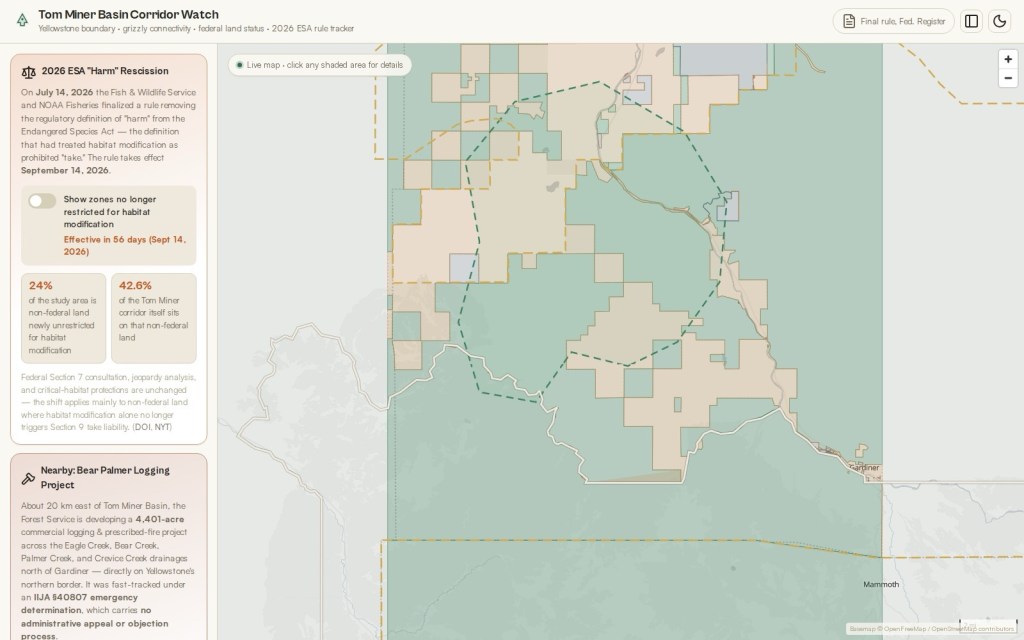
Eventually all of this language has to land somewhere. The definitions, the exclusions, and the fine print stop being words on a government website and become lines on an actual map.
Near Gardiner and Jardine, on Yellowstone’s northern border, there’s a project called the Bear Palmer Forest Health Project. Thousands of acres of proposed treatments—thinning, commercial timber harvest—moving forward under emergency authority in the name of wildfire risk.
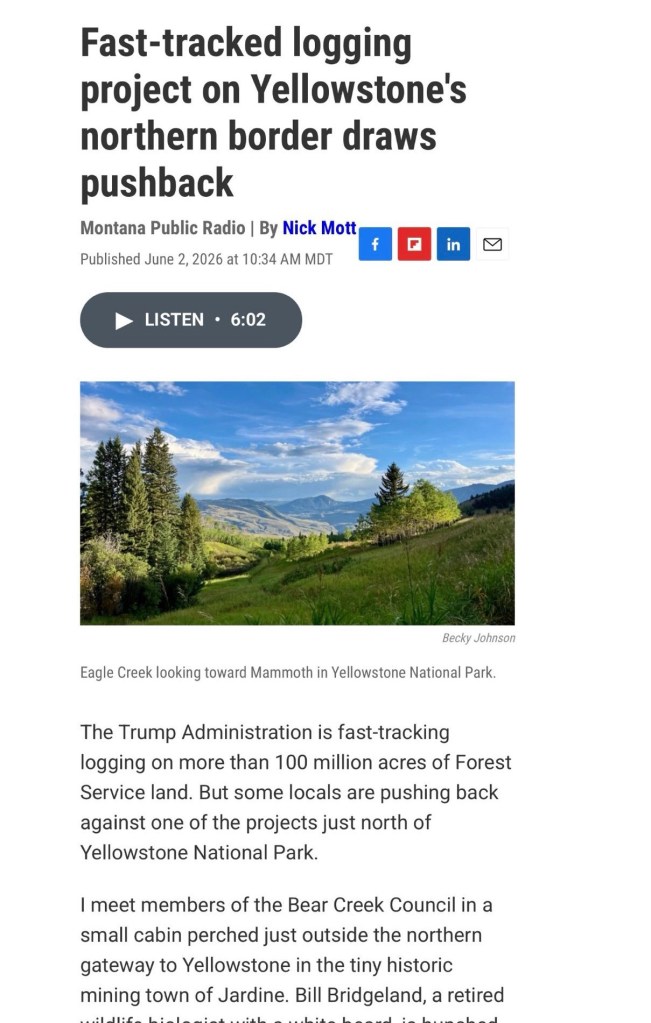
On paper, it’s about protecting communities and making forests more resilient.
On the map, those treatment units sit inside the larger ecosystem around Yellowstone—the same landscape wildlife uses once it walks past the park boundary. They also sit in the kind of forest that holds soil after a storm, stores snowpack, and softens fire season for the towns nearby.
None of that makes Bear Palmer automatically wrong. Wildfire risk is real. Forest management is genuinely complicated. Gardiner and Jardine deserve protection too.
But it is exactly the kind of project where those quiet changes start to matter.
If the regulatory definition no longer clearly connects significant habitat destruction to “harm,” that changes the argument over what a project like this means for the animals using that ground. If it’s easier to leave a place off the critical-habitat list as long as the species probably won’t go extinct without it, that shapes whether this particular stretch of forest gets treated as essential or as expendable.
The Endangered Species Act has never worked in a vacuum. Its words decide what agencies have to look at, what groups can challenge, what gets fixed before a shovel goes in the ground.
If the line moves, the project doesn’t have to change.
The rules around it do.
That’s why Bear Palmer keeps pulling me back to Tom Miner.
These aren’t disconnected dots. Yellowstone’s wildlife doesn’t stop at the entrance gate. Grizzlies leave. Elk leave. Wolves leave. They move through forests, ranches, and corridors where every quiet decision about habitat becomes part of whether coexistence actually works.
“Forest health” can be real. “Flexibility” can be useful. “Emergency” can be legitimate.
But those words carry weight. They decide which questions get asked and who still gets a say before something changes.
And looking back toward Tom Miner, that’s when the scaffold stops being a metaphor.
Grizzlies on a Scaffold
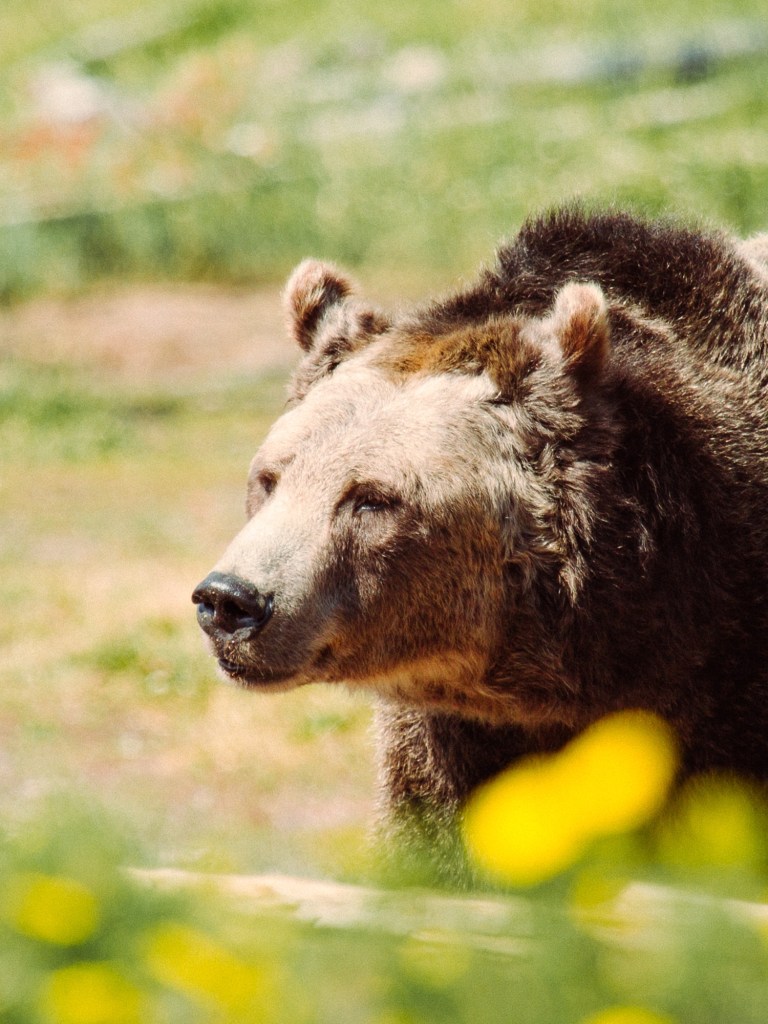
In Tom Miner, coexistence is already work.
It is somebody getting up before dawn to ride through cattle and watch for fresh sign. It is hauling carcasses out of a pasture before they turn into magnets. It is putting up portable electric fence around vulnerable ground instead of waiting for a problem and reaching for a rifle. It is neighbors comparing notes on where the bears are, what is working, and what is getting harder.
None of that is easy. None of it is cheap.
And none of it happens because somebody declared the grizzly “recovered” and the problem disappeared.
It happens because people keep doing the work.
That is the scaffold I keep thinking about.
Grizzlies in the Lower 48 exist on a structure built from intact habitat, connected corridors, conflict prevention, federal protections, state and Tribal wildlife management, ranchers willing to try something different, conservation groups willing to fund it, and ordinary people willing to accept that sharing a landscape with a large predator will never be perfectly convenient.
The law is one piece of that structure. Habitat is another. The people living with bears are another.
Take one board out and the scaffold probably still stands.
Take out another and it may still look fine from the road.
That does not mean every rule change is a death sentence for grizzlies. It does not mean every logging project is an attack on wildlife. And it does not mean states, ranchers, federal agencies, conservationists, and Tribal Nations cannot manage bears together.
It does mean I want to know which boards we are removing before we celebrate how sturdy the scaffold looks.
Back to Yellowstone’s Front Porch
Yellowstone is not for sale. Grizzlies are still listed. The Endangered Species Act is still on the books.
Those things are true.
But whether you are standing in Tom Miner, driving past your nearest patch of national forest, or living in a city that drinks water from a river beginning somewhere upstream in a landscape like this, the labels are only part of the story.
What counts is what those words actually allow on the ground—what gets cut, paved, restored, connected, protected, and who gets to decide.
Sometimes a definition disappears.
Sometimes a rule advertised as “greater state management” turns out to be a smaller procedural shift wrapped in much bigger language.
Sometimes an “emergency” designation changes how quickly a project moves.
And sometimes the most important thing is admitting that the first headline scared you more than the fine print ultimately did—while still paying attention to what else is changing around it, and to the direction the people celebrating those changes want to go next.
You do not need to memorize section numbers. But if you care about where your food comes from, whether rivers stay drinkable, whether public lands remain intact, or whether your kids might ever see a grizzly outside a zoo, it is worth reading past the headline at least once.
Look at projects like Bear Palmer and ask what changes when the laws surrounding them change.
Not because every change hides a disaster.
Because sometimes the name on the law stays the same while the machinery underneath it shifts.
The question isn’t just, “Is the ESA still here?”
It’s, “What does it still do?”
How to Read Past the Headline
If you care about grizzlies, rivers, public lands, or the places your food and water come from, you don’t have to memorize section numbers. You can start with four questions.
Harm: What counts?
When you see a project or policy change, ask: does “harm” include destroying or chopping up the habitat an animal needs, or only direct injury and death?
Habitat: What is protected?
Is the land an animal needs treated as “critical habitat” or just background scenery? Which pieces of forest, river, or open ground are actually protected, which can be left out, and who decides where that line is drawn?
Threatened: What protection comes with it?
Getting onto the threatened list is not the end of the story. Ask: when a species is listed as threatened, what protections automatically apply, and which ones depend on extra rules being written—or not written—later?
Flexibility: What does it allow?
When you hear “management flexibility,” “forest health,” or “emergency authority,” look for the fine print: what can move faster, what can be skipped, and who loses the chance to object before something changes on the ground.
Then, look for a map.
Find one project—like Bear Palmer—or one valley—like Tom Miner—and ask how those answers show up there: which habitat is treated as critical, which conflicts trigger lethal responses, and what the Endangered Species Act is still doing, not just whether it is still there.


Leave a Reply