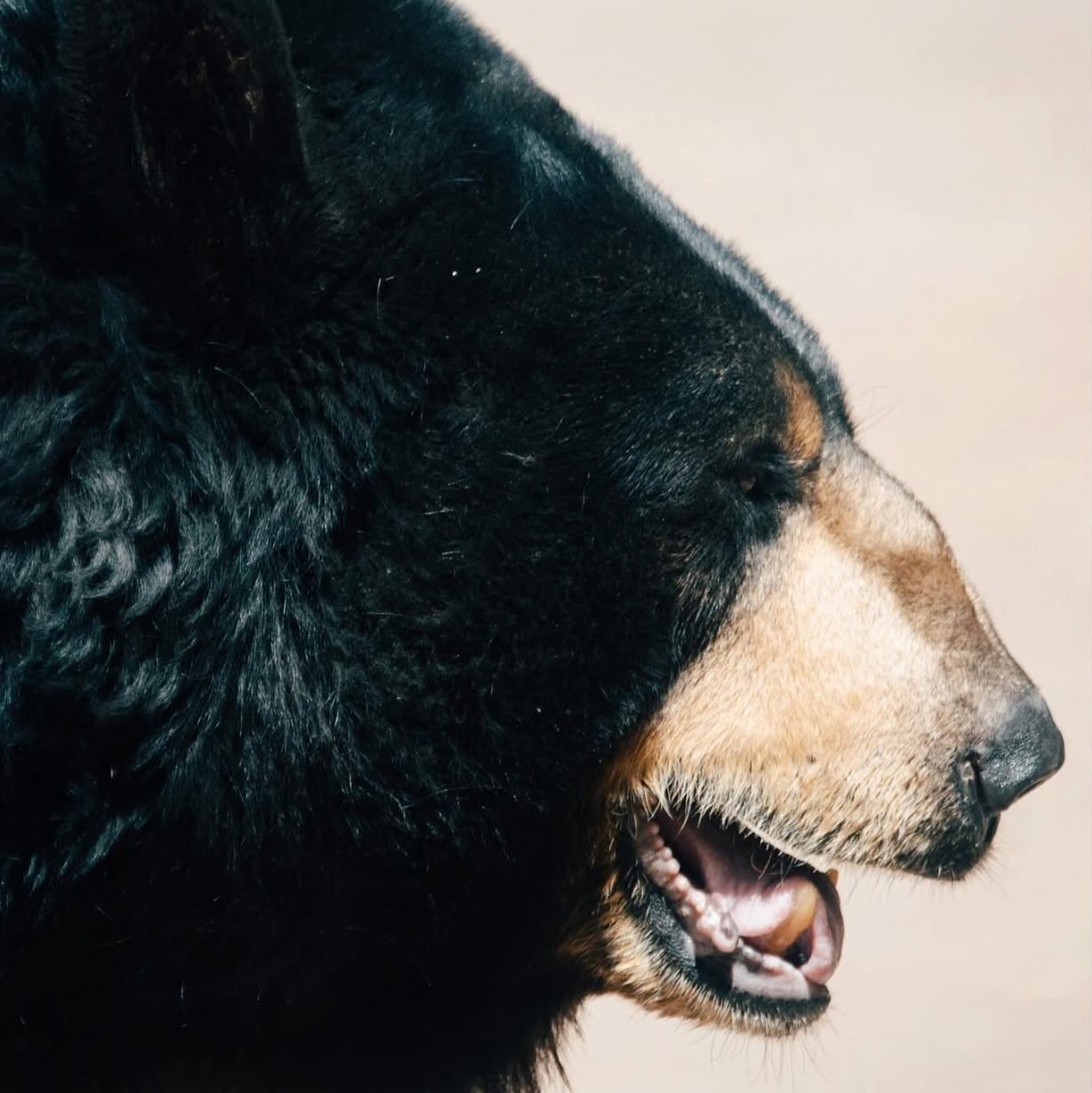
This Is Their Land. But Not for Long.
Photos by my incredibly talented guy, Jake Kinzer — OklahomaJake.com | @oklahomajake
“There are no sacred and unsacred places; there are only sacred and desecrated places.”
—Wendell Berry
They are wrapping this in the language of American freedom.
Protect landowners. Protect property rights. Get the government out of the way.
But freedom for whom?
Because the family rancher is not the only one being protected when a corporation can bulldoze an animal’s home and legally claim it did no harm.
That is the deception buried inside the language. Change the definition of a single word, and suddenly everything changes.
I just got back from yet another trip of a lifetime with my dad, my sister, and our whole crew, running around Kona, stamping our National Parks passport book, and trying to eat every piece of fresh fruit we came in contact with.
If you have ever stood on that black volcanic ground, you know Hawaiʻi changes you. For me, it changed the way I understand land. Some people bring home a cute turtle magnet. I came home with a book about Queen Liliʻuokalani and a fresh obsession with everything the brochures politely left out.
But really, there is something about looking toward the mountain, uka, and following the land all the way down to the sea, kai, without finding a true dividing line between any of it. The mountain feeds the ocean. The ocean feeds the people. The people carry a responsibility to care for both. Nothing exists on its own, and nothing survives without the rest.
Native Hawaiians have understood that for generations. Land is not simply property to be bought, divided, sold, and used until nothing remains. It is an ancestor. It is family. It cared for you long before you arrived and, if you care for it in return, it can continue caring for the generations who come after you.
You do not claim ownership over an older brother. You respect him, care for him, and understand that your lives are connected. That is the heart of mālama ʻāina: care for the land because the land is already caring for you.
I have seen the posts. I have read the headlines. I have also watched people on every side reduce this issue into whatever version best serves the point they already wanted to make.
So here is my own breakdown of what it means.
I am literally in school for this now. I am not pretending to be the world’s leading Endangered Species Act attorney, but I do spend a truly unreasonable amount of time reading about wildlife, ecosystems, conservation law, and the ways one small policy change can become something much bigger once it reaches the ground.
Soooo this will probably get me muted or deleted because:
me + wildlife + hill = RIP.
The federal government has finalized the removal of a definition that helped protect endangered wildlife for decades.
The word is “harm.”
It sounds small enough to scroll past, like one of those government things buried in a document no normal person will ever read. But that one word helps decide whether destroying an animal’s home can legally count as injuring the animal itself.
For decades, the definition recognized that there is more than one way to kill something. You can pull a trigger, obviously, but you can also cut down the nesting tree, drain the wetland, tear apart the denning area, block the migration route, or bury the feeding ground beneath development.
An animal does not have to die underneath the bulldozer for the bulldozer to be what kills it.
The new rule narrows that protection. Directly injuring or killing wildlife still counts, but wiping out the place it needs to eat, shelter, breed, and raise its young becomes much harder to hold accountable in the same way.
Some safeguards remain, especially when federal agencies or officially designated critical habitat are involved. But not every acre a species depends on has been formally designated, and not every destructive project moves through the same federal process.
So as long as no one physically crushes the animal beneath the bulldozer, the bulldozer now has a much clearer path forward.
The Endangered Species Act, Explained Like You Are Five
The Endangered Species Act is supposed to stop a species from disappearing forever, protect what it needs to survive, and help it recover until federal protection is no longer necessary.
The goal is not to keep animals barely hanging on while their names stay trapped on a government list forever.
The goal is recovery.
But recovery requires somewhere to recover.
Most species become endangered because the places keeping them alive begin to disappear. Their food vanishes. Their shelter is destroyed. Their breeding grounds are disturbed. The distance between safe places grows wider until moving through the landscape becomes dangerous or impossible.
Then we act as though guarding the individual animal while dismantling everything around it should somehow be enough.
A grizzly cannot recover without connected wild country. A wolf cannot raise pups in a clear-cut. A bird cannot return to a nest in a tree that no longer exists, and a fish cannot survive in a river we have drained or poisoned.
Protecting the animal while removing its home is not protection.
It is guarding the pulse while stealing the breath.
The Extraction Playbook
Nobody stands behind a podium and announces that a species or landscape is about to be sacrificed. That would be far too easy to understand.
It happens in pieces.
Move a boundary until the valuable timber or minerals fall outside it. Weaken a definition inside the law. Approve the road, the mine, or the development before most people understand what has been signed.
A forest here. A wetland there. A migration route split by a road. One permit. One definition.
Y’all, Save the West was the line. Where does it end?
That fight mattered because hunters, anglers, ranchers, conservationists, tree huggers, and plenty of people who probably disagree about nearly everything else realized somebody was coming for the land. We stopped fighting each other long enough to remember we actually have something in common.
The public pushed back, everybody celebrated the win, and I did too. But losing one major fight does not mean the pressure disappears. Sometimes it just changes form.
Then came the smaller headlines. Land deals. Logging projects. Highway and development plans near Yellowstone. The bison-versus-livestock fight on public land. Policy changes most people would never see unless they were already looking for them.
None of them seemed big enough on their own to become another Save the West moment. That may be exactly why they were easier to miss.
I kept running into our room during those “nothing good happens after midnight” hours and waking Jake out of a dead sleep, him reasonably assuming there was an intruder, when really it was just me holding my phone with another devastating update.
Then I would read the whole thing out loud and attempt a recap to the only real one still awake: Doc.
The annoying part was that I could not fully explain how it all connected yet. I just knew it fit somewhere.
Well. Here we are.
“Adapt or Die” Is Not a Wildlife Management Plan
People love to say “adapt or die” as though evolution is a switch an animal can flip every time humans make its life harder.
Yes, species adapt. That is how life has survived for millions of years. But adaptation takes generations. It requires enough surviving animals to reproduce, room to move, reliable food, and time for useful traits and behaviors to be passed forward.
It does not happen on the timeline of a timber sale, a mining permit, or a new subdivision.
Grizzlies are a perfect example because they are incredibly intelligent and adaptable, but adaptable does not mean invincible.
Greater Yellowstone grizzlies already live in a largely isolated population, which makes connection with other bear populations important for their future. Their food sources are shifting too.
Whitebark pine nuts are a high-calorie food that can help bears build fat before hibernation. In strong whitebark pine years, grizzlies are more likely to stay higher in the mountains and farther from people.
But those trees have been hammered by disease, insects, changing fire patterns, and a warming climate. At the same time, roads and development keep closing in around the bears.
Grizzlies can change their diets, and they do. But “the bear found something else to eat” is not the same thing as recovery.
Sometimes that something else is livestock, garbage, pet food, birdseed, or whatever it can find near a house or town. Then the bear gets labeled a problem, removed, or killed, and we pretend it made a bad choice instead of admitting that we kept taking away its good ones.
That is the part people leave out when they say wildlife will simply adapt. Adapt to what? Less food, less room, more roads, more people, and fewer safe ways to move?
We keep changing the conditions, then blaming the animal for failing the test.
That is not Darwinism.
That is leading them to the slaughter and blaming them for failing to adapt quickly enough.
Who Is This Really For?
Supporters frame the rollback as relief from unnecessary burdens on landowners and businesses.
But it is worth asking who benefits most when these protections become easier to avoid.
If a protected grizzly or wolf crosses onto a ranch, the change does not suddenly give the rancher an unrestricted right to shoot it. Directly killing protected wildlife can still violate federal law.
The family farmer repairing a fence is not the only person waiting on the other side of this decision.
Mining corporations, industrial developers, timber companies, energy conglomerates, and major investment interests do not see a mountain the way the rest of us do.
You cannot look at a mountain and see an inventory list unless you have completely forgotten what it means to be human.
But that is exactly what is happening.
They do not wonder what lives beneath the canopy or how long the place took to become what it is. They calculate what can be removed and what it will be worth.
Once destroying the place is separated from injuring the wildlife inside it, those calculations get a whole lot easier.
I am not here to sensationalize any of this, and I am not trying to drag anyone toward one political party or the other. Both have failed the land when enough money and power were involved.
These are simply my two cents after following the stories, studying the issue, and trying to understand what all those supposedly unrelated headlines add up to.
The only side I am taking is the side of the places and species that cannot lobby, donate, or vote.
Wildlife Is My Hill to Die On
Wildlife is my hill, and it always will be, but this was never only about wildlife.
Y’all do realize we live here too, right?
Cut forests and the roots no longer hold the soil and water in place. Drain a wetland and the next flood hits harder. Contaminate the ground and everybody downstream gets to live with the consequences.
Break apart enough wild country and sooner or later the damage reaches our own door.
Maybe we could take a page from our Hawaiian neighbors and remember that caring for the land is not a political identity. It is basic survival.
We depend on the ground beneath us and the water moving through it whether we acknowledge that relationship or not.
The profit is immediate.
The damage belongs to everybody else.
And maybe that is what has been bothering me through every one of those supposedly unrelated headlines.
The land deals. The logging projects. The highways near Yellowstone. The fights over who gets to use public land. The boundaries moved and permits signed while most of us were busy living our lives.
Now the meaning of one word has been rewritten.
They were never separate stories.
Save the West was the line.
So where does it end?
When Congress passed the Endangered Species Act more than fifty years ago, the law recognized that an animal is not separate from the world keeping it alive.
Native Hawaiians understood that relationship long before Congress ever wrote it into federal law.
A bear is not separate from the forest. A wolf is not separate from the country it travels. A salmon is not separate from the river.
Neither are we.
When we insist that destroying the world around an animal should not count as harming the animal, we are choosing which part of the truth we are willing to ignore.
We are saying the empty nest does not matter because no one shot the bird. The poisoned river does not matter because no one touched the fish. The flattened forest does not matter because the grizzly managed to escape before the machines arrived.
But where is she supposed to go after that?
Where does she teach her cubs to forage? Where does the wolf pack den? Where does the bird return the following spring?
Where do any of them go when every place they once depended on has been sold, drilled, mined, logged, or paved?
This is their land. It was theirs long before it was ours.
So yes, I wrote about the Endangered Species Act. I wrote about grizzlies, habitat, and the meaning of the word “harm.”
But really, I wrote about language, loopholes, money, and what happens when we keep treating every small rollback like it exists by itself.
It does not.
Pay attention to the words they change and the lines they redraw. Pay attention whenever they insist a decision is too technical, too small, or too complicated for ordinary people to care about.
That is how the land disappears—not all at once, but one stolen piece at a time.
And for the love of everything that still has a heartbeat out there, care before there is nothing left to save.
 The Wilds Project.
Leave a comment