Before the Bite
By the summer of 1967, Glacier wasn’t the only park with a bear problem. Yellowstone, Yosemite, the Tetons — all running the same play.
Every lodge had an open garbage pit out back. Picnic scraps littered the grass. Tourists tossed marshmallows and sandwich crusts to get a little closer for a photo.
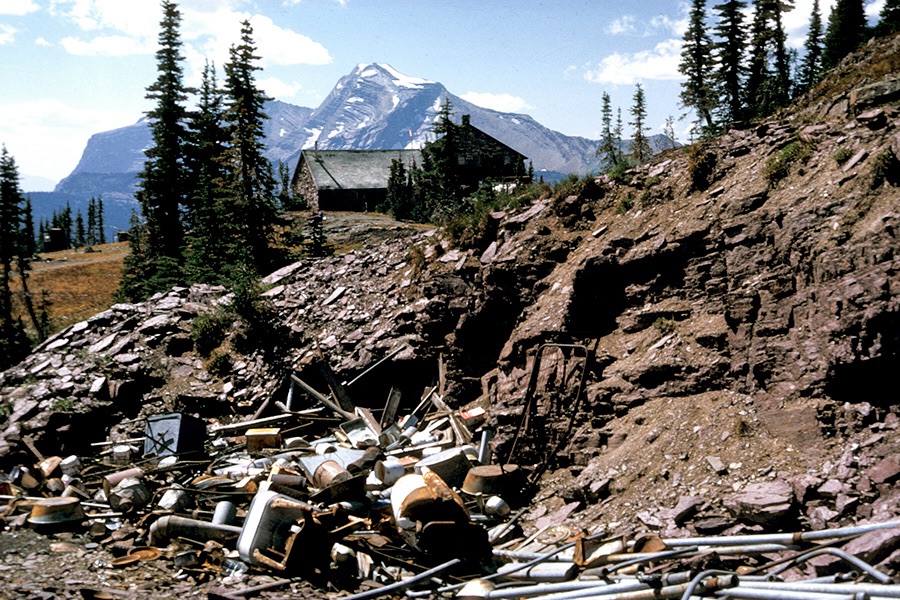
And it wasn’t just ignorance — this was encouraged. Bears were part of the entertainment. People drove to the dumps after dinner to watch them rummage through trash under the glow of lodge floodlights. Kids sat on the hoods of station wagons. Rangers stood by.
It made for great vacation stories. It also rewired the bears.
How feeding a bear changes everything
What we didn’t get back then was that feeding a bear rewrites its instincts. For a bear, food is king.
A grizzly that learns to seek out human food stops foraging naturally. Its fear of people fades. Curiosity grows.
Until one day, it’s standing in a campsite looking for dinner — and the line between wild and human is gone.
Once that happens, the bear will do anything to get it — rip into a tent, a cabin, even a car. And when it crosses that line? Someone pays for it. The person… or the bear.
That’s why you hear it now: A fed bear is a dead bear.
“Why not just move it?”
It’s a fair question. But the reality is, once a bear is conditioned to human food, relocation rarely works. They travel huge distances and almost always return — or end up in new areas where the same problems start all over again.
Zoos aren’t an option either — very few have the space, and captivity isn’t a humane or practical solution for a wild grizzly that’s spent its life roaming hundreds of miles.
And the truth is, there aren’t many wild places left where you can drop a food-conditioned bear that’s truly far from people.
Back then, these conversations weren’t even happening. Bear spray didn’t exist. Neither did the strict management plans we now take for granted in grizzly country.
This story belongs to all of us
If you’ve ever hiked, camped, or set foot in bear country, this story is yours too. Knowing it — and how we got here — is the key to making sure it never happens again.
🐾 Bear Safety Now – Quick Guide
- Carry bear spray — and know how to use it. Keep it accessible, not buried in your pack.
- Make noise — especially in thick brush or near running water. Surprise is what gets people hurt.
- Store food properly — use bear lockers, bear-resistant canisters, or a proper hang (10 ft up, 4 ft out).
- Never feed wildlife — not even “just once” for a photo.
- Travel in groups — bears are far less likely to approach a larger, noisier party.
A bear that doesn’t get food from people is a bear that stays wild — and alive.
August 12, 1967
Up on the Continental Divide, 19-year-old Julie Helgeson and 19-year-old Roy Ducat — a seasonal employee she’d met that summer — had spent the day hiking the Highline Trail. That narrow ribbon of dirt hugs the cliffs with wildflower meadows on one side and air on the other.
By nightfall, they reached Granite Park Chalet — an old stone lodge tucked high in the mountains.
Miles away, at remote Trout Lake, 19-year-old Michele Koons camped with friends. No roads. No quick way out. Just deep forest, cold water, and the sound of night settling in.
Neither group knew a bear was already on its way.
 The Wilds Project.
Leave a comment