Some things break quietly. Others take the whole river with them.
A levee is a manmade or natural barrier—an embankment of earth, rock, or concrete—built along the edge of a river, lake, or coastline. It prevents flooding from swallowing everything on the other side.
It doesn’t stop the water from rising; it just holds it back—quietly, relentlessly—for as long as it can. Its power isn’t in strength, but in resistance. Its purpose is simple: buy time. Keep the flood at bay. Preserve what’s behind it. It stands between rising waters and your home—the final breath between chaos and shelter.
But not all levees hold.
History’s Warnings
- 1927: The Mississippi River breached its levees, flooding over 16 million acres and displacing more than 700,000 people. Nearly 500 lives were lost.
- 2005: During Hurricane Katrina, over 50 levees failed. More than 1,800 people died—most of them in New Orleans—as water drowned a city in minutes.
- 1928: The St. Francis Dam collapsed while families slept. The water came without warning. 431 people died—not because of a storm, but because the foundation was never stable. It was always going to fall.
That’s the danger of illusion: it blurs the line between safety and survival. You think it’s working. You think it will hold. You ignore the gut feeling that won’t stop screaming—until, in a second, without alarms or warning, everything gives way. The levee breaks. And what once felt like protection becomes the very thing that destroys you.
Tulsa: The Spoken Agreement
We had been back in Tulsa nearly a year. We called it “co-parenting.” No courts. No paperwork. No judges. A spoken agreement—fragile but functioning.
And for a while, it did function. He picked her up. He brought her home. We stayed in our corners and kept things civil. I told myself it was working.
Until one day, he didn’t bring her back. No heads-up. No fight. No warning. Nothing.
The hours passed. Then a day. Then another. Somewhere deep in my gut—I knew. I knew something was wrong. I just didn’t know he was capable of doing this.
That’s when I made the first official move—hired an attorney. Filed the first document in what would become a soul-crushing, years-long custody war. A war I never wanted, but one I was forced to fight.
September 30, 2013
I hadn’t seen my daughter in five days. Five days since I last heard her voice. Five days of unopened doors, unanswered calls, and waking up with dread in my chest. Five days of not eating. Not sleeping. Wondering if I’d ever hold her again.
Ten days earlier we’d celebrated her fourth birthday. The apartment still held the streamers and pink balloons—her favorite color—hanging limp in the corners like they were waiting for her to come home.
But she didn’t.
My body couldn’t hold anything. Not food. Not breath. Not grief. I searched for anything that would help—Googled every possible route, legal loophole, hotline, post. I begged God for a sign. I scrolled Facebook until my eyes blurred, scanning every photo for some clue. I called hospitals. Left voicemails. Called again. And again. Desperate for any proof she was still alive.
I texted old mutual friends. I called his mom, his sister—women I used to speak to several times a week. Women I’d lived with. Trusted. But there was nothing. No warning. No reply. Not even a single text to say, “I’m so sorry.” It was like they’d vanished with him. Like none of it had ever been real.
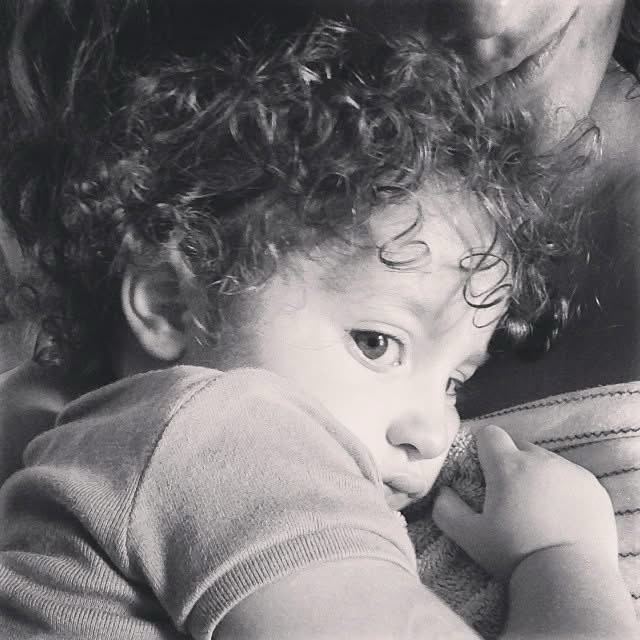
While the world spun and everything unraveled, two-year-old Novi had one crushing question: “Where’s Sissy?” She checked closets, lifted blankets, peeked behind curtains—like maybe Gemma was hiding. Like maybe this was still a game.
But it wasn’t. Gemma was gone—and yet somehow, still everywhere. Her voice lingered in the apartment. Her toys lined the shelves. Her favorite cup sat in the sink.
When Novi asked, I lied. “She’ll be back soon.” I said it like I believed it. Like if I said it enough times, one of us might.
Just Five Days Earlier…
We met for coffee. Me, him, and his new girlfriend—who had flown in from New Hampshire. We sat at Starbucks and made uncomfortable small talk. He made a joke, and I actually smiled. She chimed in like it was all normal.
I was nervous, but hopeful—more hopeful than I’d admit out loud. I wanted to build a bridge if this was someone who’d be around my daughter. It felt big. Important.
It wasn’t about jealousy. It was about us. Gemma. Novi. Me. I never imagined life would go the way it did, but once it was the three of us—I knew. We were inevitable. Soulmates. Three toothbrushes in a tiny bathroom. Three names on every form. Three shadows tangled on one couch. I hated the idea of anything unraveling that.
So I showed up. I smiled. I shook her hand. I swallowed the lump in my throat. I believed in peace. It felt like we’d made it to the other side of the storm. Like maybe we were writing a new chapter—one where Gemma came first.
I believed it. Fully. Because it looked real. Felt real.
But it wasn’t. It wasn’t peace. It was a script. And he was the one holding the pen. Making me the villain meant he could rewrite the ending, walking away the hero. She didn’t know me—she knew the character he’d described. Everything he needed me to be to justify what he was about to do.
He looked me in the eye, smiling as he raised his coffee. “Cheers.” I smiled back—completely unaware. His truck sat less than a hundred feet away, already packed. They were leaving the next day—with my daughter—and saying nothing.
Control wasn’t a side effect. It was the intention. That smile wasn’t charm. It was the signal.
Thursday
I dropped Gemma off like I always did, planning to pick her up after work. A routine exchange. Nothing strange. No warning signs. I told Gem I’d see her in a few hours.
The hours came and went. No call. No response. I tried to convince myself I was overreacting. Told myself he was distracted. Maybe she fell asleep. But that bone-deep, mother-knowing started screaming something was wrong.
Friday Night
I drove to his apartment. Sat in the car white-knuckling the wheel, trying to will myself into calm. Eventually, I knocked. Waited. Nothing. I stood there, frozen, thinking about peeking through the window—but I couldn’t. Something in me already knew. And I wasn’t ready to see it.
Around 10, back at my apartment I posted on Facebook. Just a few lines: had anyone seen them? Heard from him? My gut was screaming. I didn’t know what else to do.
That post cracked the silence wide open. Within hours, it was everywhere—friends, strangers, people I’d never met—resharing it—passing my fear from screen to screen, state to state. The comments rolled in: “Call the cops.” “File something.” “Don’t wait.”
So I did. I called the police, apologizing the whole time—for bothering them, for not having proof, for sounding unhinged. They told me it was a civil matter. There was nothing they could do. As if a missing child could wait until Monday.
Saturday Morning
I pulled into my mom’s driveway desperate for oxygen. I thought I’d get a hug—someone to tell me I wasn’t crazy.
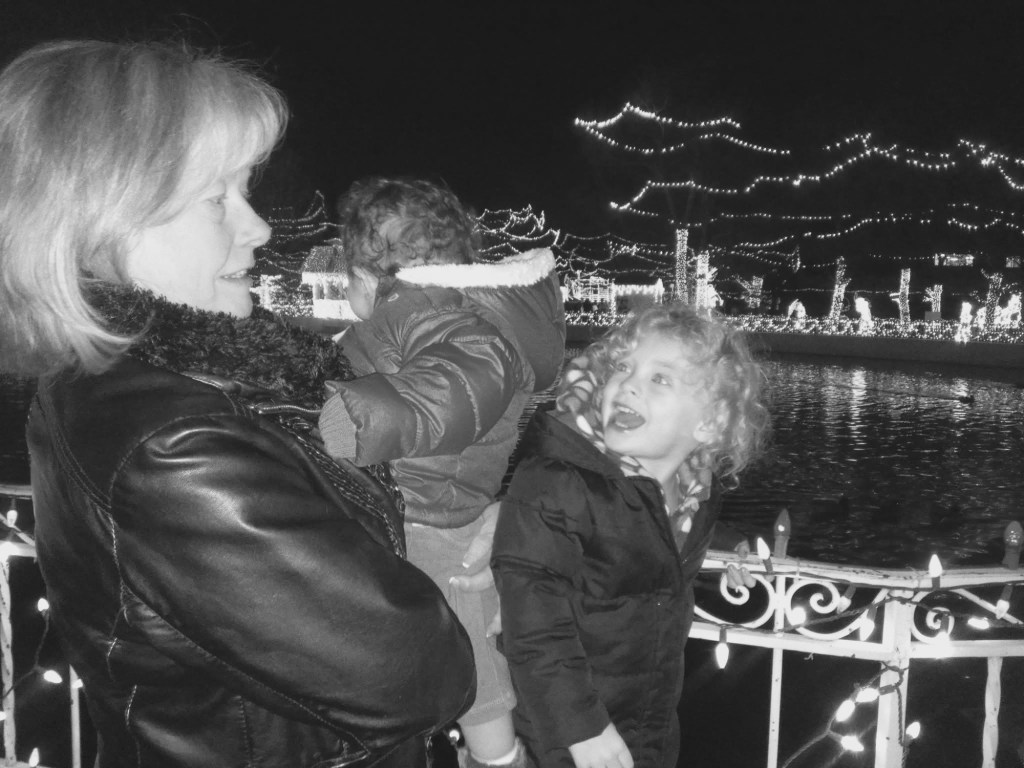
She opened the door before I knocked. She grabbed Novi without a word and pulled her in like holding tight enough could absorb every bad thing coming for us. She didn’t ask what happened. She didn’t need to. She already knew.
She didn’t ask what happened. She didn’t need to. She already knew.
“I knew he’d do this,” she said—voice sharp, almost shaking.
Not surprised—furious.
Because she wasn’t just scared for her granddaughter—she was watching it happen to her child. Again.
All the years of watching me crawl out from under him. All the nights she didn’t sleep. All the times she wanted to step in and didn’t—because I kept saying, “I’m fine.”
So when she opened that door and saw the look on my face, there was no more sitting still.
The dam had cracked. She was ready to detonate.
She didn’t coddle me. She didn’t hug me. She didn’t cry.
She pushed me toward my car. “Go,” she said—gritted teeth and a voice that cracked halfway through. “Go get your daughter. Do not come back without her.”
She slammed the door and locked it behind me.
Not to shut me out—but to protect what was left. To block the ache barreling toward Novi. To shield the only child she still had in her arms.
And in that moment, I saw it.
The terror. Holding together just long enough to send me out the door.
But mostly—I saw the kind of love that would burn the world to the ground just to bring my daughter home.
The Flood
I got out of the car in the rain. Heart pounding. Stomach in my throat. I walked up to the same apartment I’d dropped her at days before. Knocked. Waited. Nothing. Knocked again—harder. Still nothing.
I looked through the window—which was a straight view into her room, kitchen, and the living room.
“Oh my God.” It looked like a robbery. Cabinets yanked open. Drawers empty.
The only thing left in Gemma’s room was the butterfly bed frame. My dad bought it for her when he came to New England for her second birthday. The mattress was gone. Her clothes were gone. Every toy, every book, every trace of her—gone.
Then the neighbor stepped outside. Startled by the noise. He looked at me, looked at the apartment, and said—like he was commenting on the weather— “They left. Said they were moving to New Hampshire.”
When the Levee Breaks
“He has my daughter.” “HE HAS MY DAUGHTER!”
My knees buckled. Not in surrender—but instinct. It was now pouring. I was soaked. I didn’t care. A scream tore through me—not a sound, a rupture. A primal reckoning. An eruption of everything I couldn’t protect.
The fear no mother dares to name: that she’ll survive it—left with the weight of still breathing.
My hands reached for nothing—because she was already gone. My mind went white. Not blank—white. Blinding. Deafening. It wasn’t fear anymore—it was reality.
It was Saturday. It was raining. I was drenched and begging God she was still alive somewhere. Everything that could’ve helped was closed. The courts. The offices. The people with power. My daughter was gone. And help wasn’t coming.
It was all too much. And when the levee finally gave—so did I. I felt like I’d died. Like I could have laid down right there and disappeared.
But only for a moment. Because while the flood stole one daughter from me—the other anchored me to shore. The dam that held when I couldn’t.
So I stood there—drenched, shaking, hollowed—and kept breathing. For the daughter I couldn’t reach, and the one I couldn’t let go.
 The Wilds Project.
Leave a comment