(All photography on my blog is taken by my incredibly talented husband, Jake. Follow:Oklahomajake on IG.)
http://www.oklahomajake.com
West Yellowstone, Montana
Our alarms went off at 2:15 AM. By 3:00, we were on the road—driving through the pitch-black silence of America’s first national park, chasing what Yellowstone had to offer.
We were heading to Gardiner, Montana to meet our wildlife guide, Evan Stout. My dad, sister, and brother-in-law had met him on a previous trip, and he left such an impression they tracked him down again. Since then, he’s launched his own company, Yellowstone Wildlife Guide Co., and somehow, we were lucky enough to snag a day with him.
Let me just say up front: I don’t know how to put this day into words. I’m still processing. Still picking my jaw up off the ground. Still feeling like the girl who somehow walked into a Nat Geo documentary.
We met Evan just before sunrise and entered the park through the North entrance. “What animals are you hoping to see?” he asked.
“Wolves!” I blurted out without hesitation.
I’d read The Wisdom of Wolves by Jim and Jamie Dutcher a few years ago, and it changed me. Wolves became sacred. I knew the chances of actually seeing one were slim, but I was cashing in every ounce of hope I had.
Less than 20 minutes into the drive, we spotted two pronghorn in a field. Evan silently pulled over, grabbed his scope, and pointed.
There he was—a lone black wolf trotting across the field, about 50 yards away.
My life is complete.
We watched him for a few minutes before Evan told us to watch the pronghorn. “Notice the direction they’re looking.” As we followed their gaze, the wolf picked up speed—chasing. The pronghorn vanished over the ridge. The wolf, too. Ambition without skill. A young hunter, still learning.
I didn’t think the day could get better.
And then it did.

Evan took us deeper into Lamar Valley and introduced us to the Junction Butte Pack—one of the largest wild wolf packs in the world. At one point this spring, they had 35 adults and 17 pups. We watched them interact—eight puppies and four adults playing, resting, guarding. Evan answered every question with the kind of passion and precision that only comes from someone who truly lives what they teach.
I brought up the Dutchers and Evan lit up—he knows them. (For 6 years Jim and his wife Jamie lived among the now-legendary Sawtooth Pack closely studying their social dynamics and behavior—Jim was a consultant during the reintroduction of wolves into Yellowstone in 1995.) To me, Jim is to wolves what Jane Goodall is to primates.
And as we watched the pack through scopes, Evan served us hot coffee, cocoa, and huckleberry scones from Wonderland Café.
It wasn’t quite 7:00 AM.
Canas Latrans: “song dog”
While we waited, the coyotes started singing. At least three packs, howling back and forth. Evan explained, “It’s like walking to the end of your driveway every morning and yelling, ‘HEY! I LIVE HERE!’” The girls cracked up—and honestly, so did Jake.
He told us about the unjust reputation coyotes have. For 200 years, the government has tried to wipe them out. Traps, poison, bullets. And yet… there are more coyotes today than there were two centuries ago. Why? Because they adapt. They’re scrappy. Survivors. And what we fear, we often try to destroy.
Coyotes don’t get the reverence that wolves do. They aren’t admired for their strength. But their survival? Their refusal to be erased? That’s something to sing about.
Today, their chorus sounded like resilience.
Scouting Grizzlies.
Right as the howls faded, we spotted our first grizzly—about 4 miles away, only visible through a scope. Evan asked, “How many times did he stop moving?”
Answer: not once.
“Bears never stop moving,” he said. “That’s how you know it’s not a bison from far away.” This time of year, they’re foraging nonstop—thistle, roots, and especially huckleberries. It’s their summer warm-up before fall hyperphagia hits.
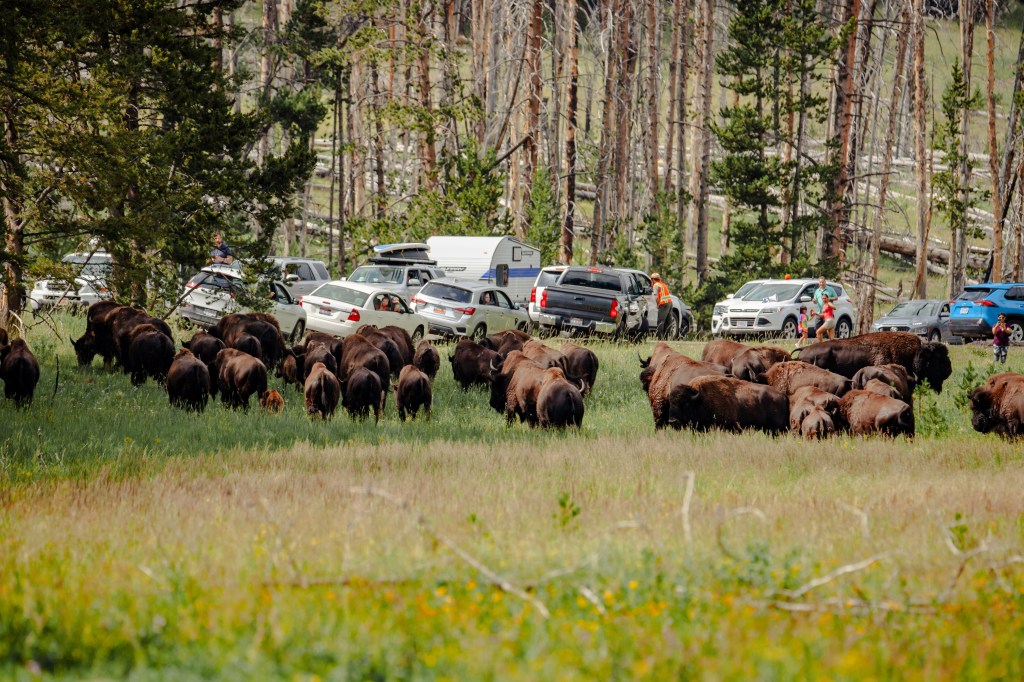
And just as the grizzly wandered out of view, a massive bull bison turned his attention to us. Evan didn’t hesitate: “Back in the car. Now.” We listened.
Pro tip: never underestimate a 2,000-pound animal on testosterone preparing for breeding season.
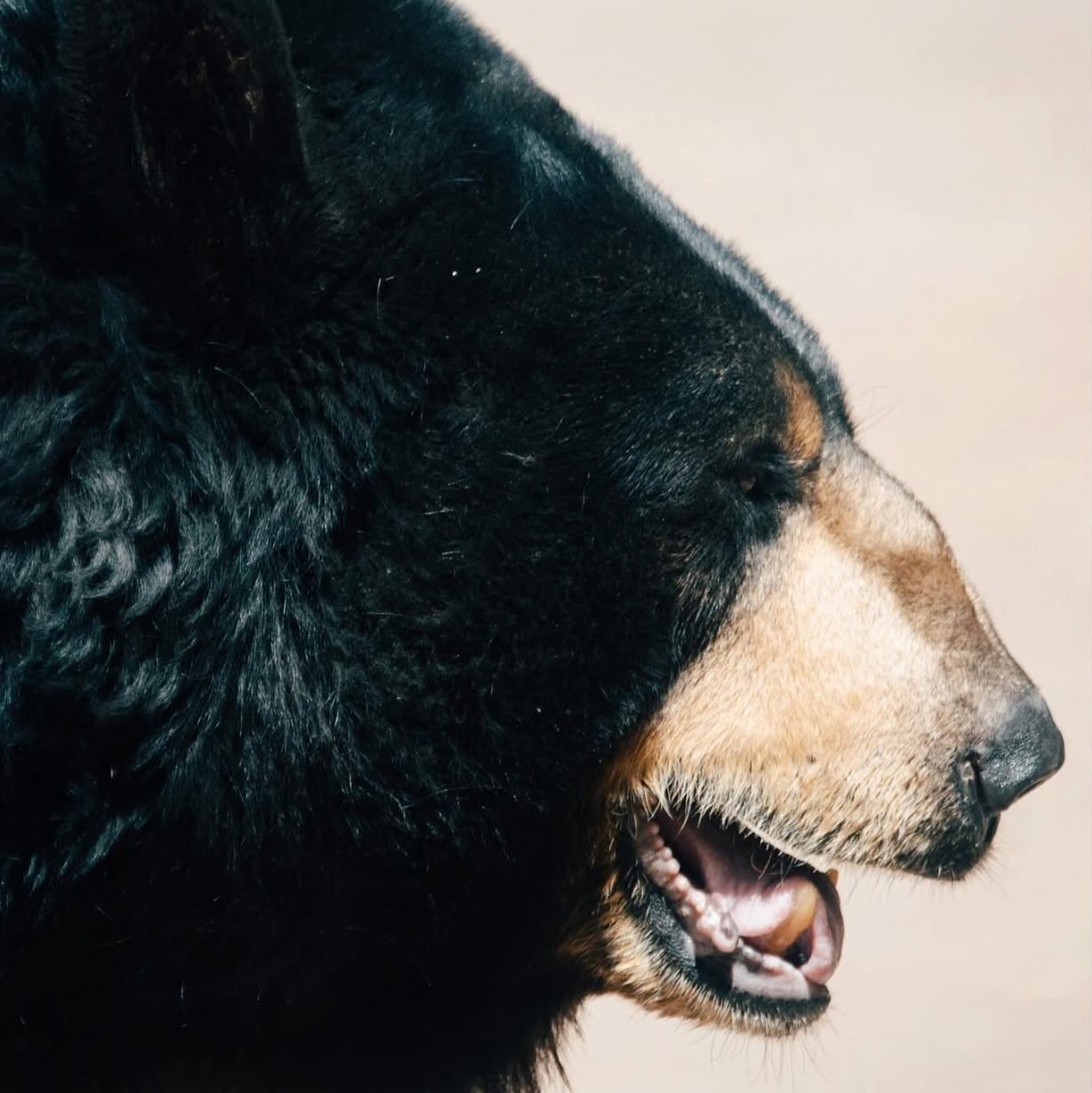
We drove deeper into Lamar Valley, where Evan told us about the legendary grizzlies of this park. That’s when he brought up Scarface.

The Legend of Scarface (#211)
If you’ve spent any time learning about Yellowstone’s grizzlies, you’ve heard of Scarface.
The oldest, most beloved bear in the park’s history.
Scarface was a 25-year-old grizzly—old by wild bear standards, nearly ancient by Yellowstone’s. A legend not because he was the largest or most fearsome, but because he endured. Battle-worn and weathered, he carried the deep grooves across his face like a roadmap of survival. His scars came from fights with rival boars, likely defending territory, food, or a sow in estrus. But it wasn’t his appearance that made him famous. It was his spirit.
Scarface was often seen roaming Lamar Valley or near the Yellowstone River, and he became a favorite of rangers, photographers, researchers, and visitors alike. He was collared and tracked multiple times over the years, and what made him unique—besides his iconic face—was his willingness to be part of the scientific work. He was known to willingly walk into research traps. Not once. Not twice. But seventeen times. As if he understood the work being done was for something bigger than himself.
He lived among humans without ever becoming a problem bear. He was wild, but wise. Powerful, but peaceful.
And then in 2015, just outside the northern boundary of Yellowstone, he was illegally shot by a trophy hunter. His body was found riddled with bullets. The investigation is still technically open. No one has been held accountable.
Evan spoke about him with reverence. Not just as a guide, but as someone who had walked the same trails, watched the same bear, and felt the same ache when he was gone.
Scarface’s death wasn’t just the end of a bear. It was the reminder that protection for these animals is fragile—an invisible line drawn on a map. Inside the park, revered. Outside of it, a target.
Scarface’s story is proof that even the most known, most studied, most loved animals are still at risk. That legacy, scars and all, doesn’t always protect you.
But it should.
And that’s why his story still matters.

Driving back through Lamar, Evan began to piece together a mystery. Rumors of an elk carcass. Sightings of wolves the day before. And two grizzly bears, both circling the confluence.
He radioed in a warning—fly fishers were nearby. He later told us he’d be relocating his fly fishing clients to another creek.
Because that’s who Evan is.
He doesn’t just know the land. He protects it.
Later, Novi asked Evan his favorite Yellowstone animal.
Without skipping a beat: “The bison.”
He told us about a recent moment where a solo bison walked across the entire valley just to stand over a lounging wolf pack until they moved. A silent message: This is mine.
And just like that, the crown was claimed.

As we wrapped up the day, we stopped for one last break—hot chocolate, huckleberry scones, and a conversation about the Endangered Species Act. Evan spoke about why these protections matter. Why wolves, grizzlies, bison—all of them—have fought, tooth and claw, for the right to still exist.
Our final wildlife encounter came from the king himself—a massive bull bison who locked eyes with us and reminded everyone, without saying a word, exactly whose land we were on.
We backed off.
Because in Yellowstone, you don’t call the shots. You don’t set the pace. You don’t get to pretend you’re in charge.
“You are not the dominant creature on this landscape. It’s an enforced humility.”
—Doug Peacock
That quote stuck with me. Because that’s what I felt the entire drive home. Not fear. Not even adrenaline. But reverence. Wonder. And a deep, holy respect for the land beneath my feet.
I left that day changed. Wrecked in the best kind of way.
Because the wild doesn’t ask you to conquer it.
It asks you to witness it.
To respect it.
To protect it.
So if you make it to Yellowstone—book a day with Evan. Let him show you the version of this place most people never see.
And when you go, remember this:
Keep it wild. Keep it free.
Be good stewards. Pick up your trash.
Respect the animals. Don’t feed them (yes, even the chipmunks).
Give them space.
And always—always—look a little longer.
Because the wild will speak…
if you’re willing to listen.

 The Wilds Project.
Leave a comment